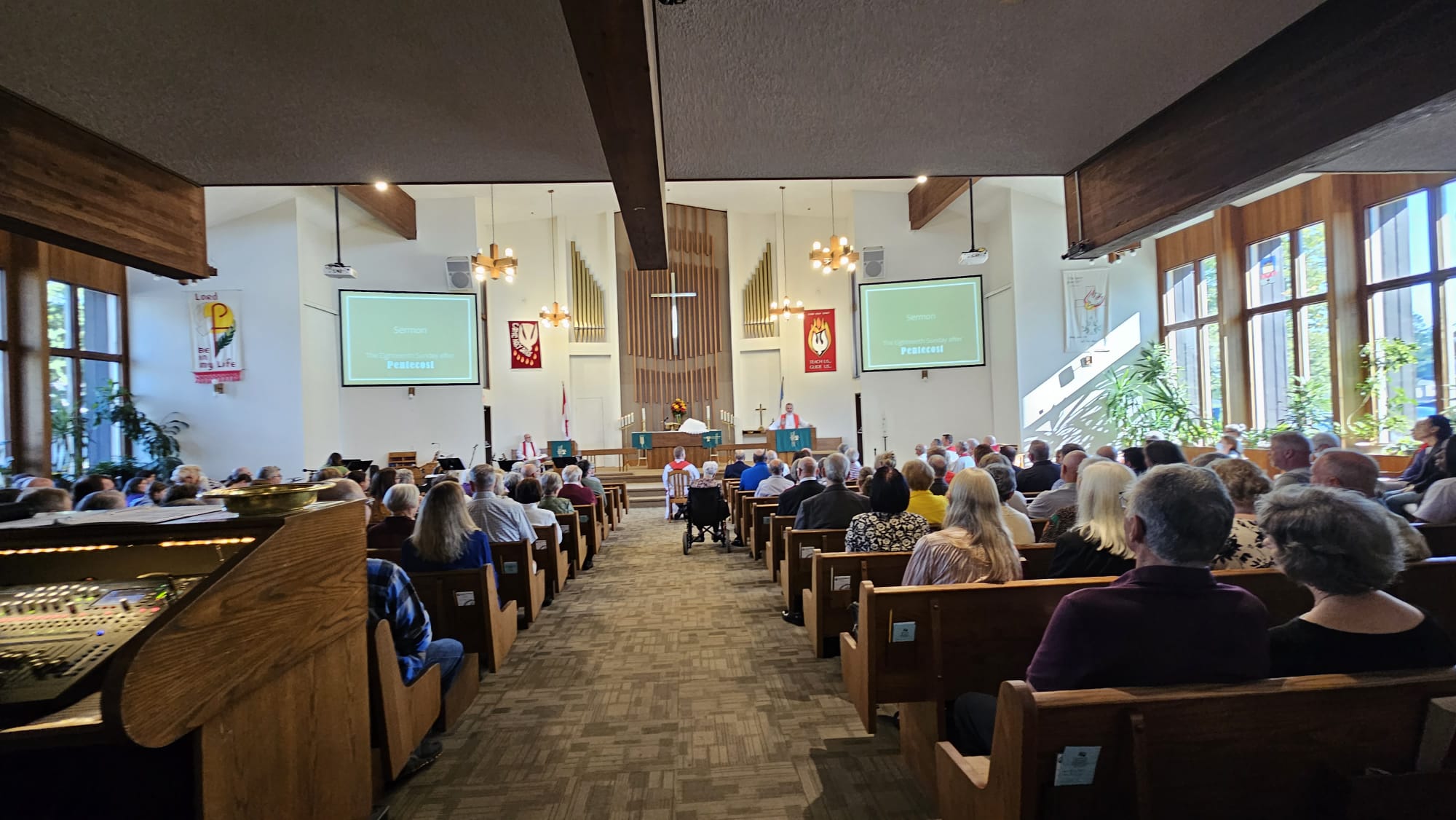

Sermon – September 27th, 2026
Hope Lutheran Church, Port Coquitlam BC
Text: Matthew 21:21-33; Philippians 2.1-4;14-18
Theme: “A change of mind”
___________________________
Introduction – In Matthew 21. Jesus tells the parable of two brothers who receive the same command from their father: “Go work in my vineyard.” The first one says no but later changes his mind and goes. The father asks the second son the same thing. He says, “Yes, sir,” but he does not go. Two boys with a similar even: a change of mind.
Jesus asks, “Which of the two did the will of his father?” The answer is obvious: the one who actually went. The first son’s first answer was wrong, but his final attitude was right. He changed his mind, and that change showed up in what he did. The second son gave the correct answer, but he did not have the right attitude. His actions were not where his words were. A change of mind.
The people who said yes
This parable is about a people—the chosen people of God, Israel. They said they would obey the Father. That is, they would receive the Messiah. They knew the promises. They had the Scriptures. They had the temple. They knew what the prophets had said.
But now the Messiah is standing in front of them, and they question His authority. “Who do You think You are?” Their words fall flat. Their attitude is, “No. Not going into this vineyard. Not a chance.”
Near them were tax collectors and prostitutes—sinners, people whose lives had said no to God in their life and attitude. But now their minds have changed. They saw the Messiah in front of them. Words were overturned. Unbelief fell flat, and their hearts were turned to Jesus.[1]
That makes us wonder: How can a mind be changed?
Human tools and spiritual life
In this topic, even as Christians, who know about God’s call and God’s grace, it is easy for us to go back to human explanations and human tools. “You have to accept Jesus.” “You better have a plan.” “Here are ten tips for how to straighten your life before God.” “You need this new book.” “You need therapy.” “You need to believe in yourself.”
Now, some of those things can be good in their proper place. But only when we are talking about human affairs. Here we are reflecting on spiritual life. When we are talking about a change of mind that is really a change of heart—repentance, faith, forgiveness, and new life—human tools cannot do that work.
There is only one Book that can change minds, or rather, hearts: the Book—the Word of God.
The Bible does not work because it is simply more impressive than other books. It works because, in Scripture, God speaks. He shows us who we really are. He shows us our sin—not to humiliate us, but to bring us to repentance. And He shows us Christ, who has taken our sin and carried it to the cross.
The chief priests and elders begin by asking Jesus, “By what authority are You doing these things?” They want to know who gave Him the right to teach in the temple, to cleanse it, to heal people, and to call them to account.
But Jesus’ authority does not come from them or from any human institution. It comes from the Father. So when Jesus calls people to repent, He is not offering another opinion or another strategy for self-improvement. He speaks with the authority of the Son of God. His Word is not only information; it does something. Through His Word, the Holy Spirit calls, convicts, forgives, and creates faith.
The mind of Christ
That is why Paul can say in Philippians, our epistle for today: “For it is God who works in you, both to will and to work for His good pleasure.” (Philippians 2:13). God works in us not only what we do, but even the will to do it. The change of mind begins in the mind of God.
That is a relief, because otherwise it all depends on us. It depends on us finding the right words, making the perfect argument, reading the right book, or organizing our lives well enough to make ourselves into better Christians.
But Paul says that God is at work. Even when we can say we repent, we believe, we make our decisions, we go into the vineyard, behind it all is the gracious work of God, who works in us both the willing and the doing.
And that leads to another question. If God changes our mind, what is He changing it into?
Paul answers that one too: “Have this mind among yourselves, which is yours in Christ Jesus.” (Philippians 2:5). God is not simply helping us become better versions of ourselves. He is giving us the mind of Christ:
- Humility.
- Service.
- Obedience.
- Love.[2]
A changed heart is not simply a mind that has better information. It is a mind that begins to look like Christ’s mind. It moves away from self-protection, self-importance, and self-justification. It learns to serve. It learns humility. It learns obedience. It learns love.
And then Paul gets specific about what that mind refuses and what it does:
- It does nothing from selfish ambition or conceit. These are the two quiet operating systems behind almost everything we do, climbing for ourselves, or performing for ourselves. Paul names them and shuts the door on both.
- It counts others more significant, in humility. Not fake humility, not self-hatred dressed up as virtue, but a genuine, deliberate repositioning of attention to ourselves and to others.
- It looks not only to its own interests, but also to the interests of others. Read that “not only… but also” carefully. Paul isn’t telling you to stop caring about your own life. He’s telling you to stop it being the only thing you can see.
That does not mean we can become Christ by our own effort. It means that, through faith and the work of the Holy Spirit, Christ is forming His life in us. He is changing not only what we do, but how we think. Not only our actions, but our desires. Not only our behavior in public, but our inner life before God. This is what faith looks like in practice: faith active in love.
Through faith, God is in action. His Word changes minds, changes hearts, and brings new life, because God is working in us both the willing and the doing.
Conclusion – Speaking of changing minds and new life, I share with you a story from my ministry as a campus pastor to conclude this sermon.
Because the university where I was working was so big, I received contact from many different people—many of them completely unknown to me. That is how I received an online message through the campus ministry website from a young woman who was in a very difficult moment in her life. She was pregnant, alone, without money, and convinced that her family would reject her. Her boyfriend had disappeared. She had obtained abortion pills illegally, and she felt trapped between panic, shame, and a decision she believed she could not escape.
She asked a terrible question: “If I do this, will God condemn me? Can God forgive me?”
When I replied to her, I did not tell her that sin was not sin. I affirmed that the life within her mattered before God, and that fear should not be the voice leading her. But neither did my words just crush her with condemnation. I told her that abortion was not pleasing to God, but I also reminded her that she had a loving Father to whom she could bring her heart and life, with all her fear, failure, and anguish.
Months later, she contacted me again. Here is what she wrote:
“Hi Pastor,
I’m sorry it took me six months to reply to your email. So much has happened, and I have not stopped for a moment during these past months. Only now, because I am resting a little, have I been able to write and give you some news.
What happened is that I did not have the abortion. Here I am, thirty-nine weeks pregnant, and the baby should be born any day now. I could not go through with it. Part of me wanted to do it and get rid of the problem, but another part of me kept saying that it was wrong. In the end, I could not do it. I threw the pills away and continued with the pregnancy.
I told my parents. It was a great disappointment for everyone. My mother still does not speak much to me, but, surprisingly, my father was understanding. I am living with them, and they did not throw me out of the house.
It is a girl. Her name will be Raquel. Her father is still distant, but my father took legal action, and he has been providing financial support during the pregnancy.
That is what I wanted to tell you. Thank you for telling me, back in January, that abortion was not pleasing to God. And today, in spite of everything, I am so anxious to see her arrive. I am terrified of childbirth, but I do not know—I already feel connected to her. Thank you very much.
With appreciation,
Ana.”
Her life did not suddenly become easy. Her fears did not disappear, her family situation was still painful. But something changed. The Word of God met her in the middle of fear and confusion, and the Holy Spirit worked through that Word. Her mind was changed. And here is the truth: even if she had decided otherwise, the same Lord would have been available for her too. To forgive her sin, to welcome her heart and to help her carry on.
A change of mind in Christian terms is a change to the mind of Christ. A change to new life. Christ is the Savior who humbled Himself for us, died for us, and rose again for us. In the midst of our fears, anguish, and guilt; in the midst of our challenges, He speaks love, forgiveness, and care.
Our world often says, “Nothing is as permanent as change.”
Meaning that everything will necessarily change. In Christ, we see something different: The Holy Spirit has changed our mind and our hearts, so that they do not need to be changed again.
________________________________
[1] Jesus tells the chief priests and elders that tax collectors and prostitutes are entering the kingdom of God ahead of them, not because their sin was insignificant, or because Jesus was saying that their former life did not matter. Their sin mattered. But they heard John the Baptist’s call to repentance, and they believed.
Their lives had said no to God in clear ways, but when they heard the Word of God, something changed.
The religious leaders heard John too. They saw what was happening. But they did not repent and believe.
[2] Christ did not use His authority to protect Himself or make Himself more important. Though He was in the form of God, He took the form of a servant. He humbled Himself. He became obedient even to death on a cross, and He did that for us.
The mind of Christ is humility, service, obedience, and love. Christ did not use His authority to protect Himself or to make Himself more important. Though He was in the form of God, He took the form of a servant. He humbled Himself. He became obedient even to death on a cross, and He did that for us.