Sermon – June 28th, 2026
Hope Lutheran Church, Port Coquitlam BC
Text: Matthew 10:34-42
Theme: “Confessing our position in His Name”
___________________________
Intr – How hard or how easy do you find it to take a position in your daily life? I guess you would say, “It depends.” And rightly so. It can depend on the context, on the people you are talking to, or simply on the topic being discussed. There’s a real difference between positioning yourself on whether pineapple belongs on pizza and taking a firm stand on a political, spiritual, or interpersonal matter.
Last Sunday we heard about persecution — how we will be hated by all for Jesus’ name’s sake. His name will bring hatred into our Christian lives. And yet, love equals salvation. The Gospel for today brings another side of the same coin. As Christians, we have to be reminded that persecution happens for a reason, and that reason is confession. When is your faith mocked, shamed, persecuted, or condemned? It happens only when your confession shows where God has positioned, grounded and rooted you. This is the heart of Jesus’ argument when He says He did not come to bring peace, but the sword — even inside families.
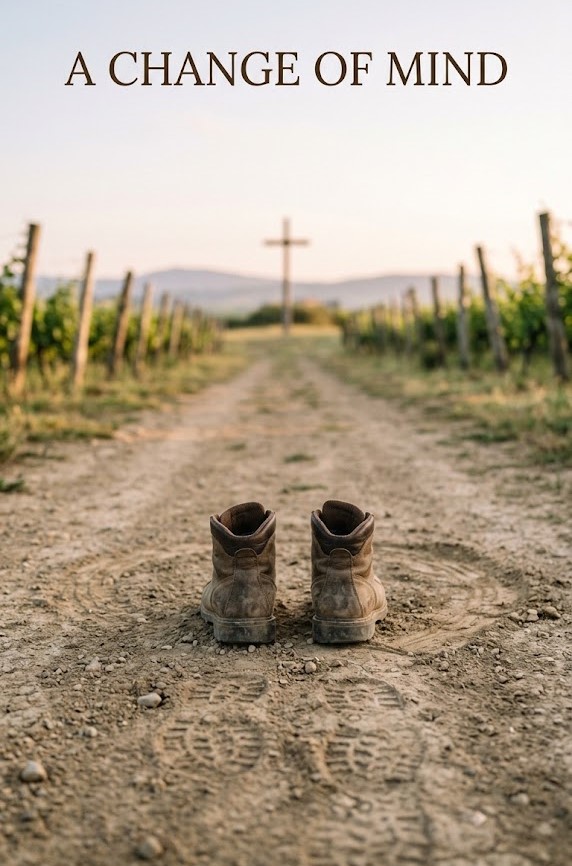
Let’s be clear about what that does not mean. This text cannot be used as an excuse to be rude to your spouse or children, to neglect your elders, or to maintain behaviours that ruin a home week after week. If we are that person, Christ invites us — not tomorrow, but today — to repentance and change.
The division Jesus speaks of is connected to confession: taking a position and being firm in what you believe.
There are many areas of life where this plays out, from Scripture to ethics to the hard questions people are wrestling with. You may feel unsettled sometimes about how to respond. And I think that’s why Jesus connects it even to family life. Because that is where faith may face some of its hardest tests.
That’s why the first reading of this passage from Matthew can feel disheartening, even anxiety-inducing. In one sense, perhaps it is — because we are fragile, and we do not enjoy suffering, least of all within our own families. We prefer to live at peace with everyone, as much as we can. But this text also points to love, and peace. On one hand, Jesus makes the necessary distinction between the kind of “peace” that avoids conflict at any cost and the peace that is rooted in Him. And He is the same Lord who gives you the peace that surpasses understanding — a peace that guards your heart inside the love of God.
In those hard moments, do not forget the Sword of the Spirit, which is the Word of God, and the fire of the Lord in His Sacrament, setting our hearts ablaze with fervent faith toward God and fervent love toward one another.
The other readings this Sunday help in the picture. In Jeremiah 28, the people are longing for quick peace — but Jeremiah’s message is unyielding. People want one kind of peace, but our Lord defines it differently. Psalm 119, with its 176 verses each pointing in some way to the Word of God, reminds us of just how comprehensive and sufficient that Word is — every single verse, anchored in the same ground where our faith stands. That is also what can draw enmity and hatred from the world. And Paul in Romans 7 shows us the fruit of it all: freed from sin, we now belong to Christ. Saved by Him, we go into our daily vocation and live according to His will.
And here is where the Gospel calls a question that is worth reflection upon: Does my faith actually shows out there? Does it cause me discomfort or opposition? Have I ever felt, even for a moment, that I might be confronted about for what I believe? Is my faith truly moving from my heart, through my mouth, my hands, my feet, my actions? The only faith that is never challenged is the one that is never shown. And as St. James says, a faith like that might as well be dead.
I know that is not easy to hear, since in some conversations the road leads not toward peace but toward the sword — and in some countries, that is not merely a figure of speech. Christianity remains the most persecuted religion in the world today.
That’s why confessing Jesus and being positioned by the Holy Spirit reminds of these two truths: First, we rely completely on the Holy Spirit’s action. It is not our job to convince and convert. We can do the best within our reach — with our intellect, our abilities, our emotions, our respect for others. But all of it is God’s work. Second: that does not keep us from speaking boldly. We can learn from the apostles who, even with their full confidence in God’s action, never stopped confessing their faith and taking their position. They faced insults, disdain, indifference, humiliation, imprisonment — all because they simply could not stop talking about what they had seen and heard. What I’m contrasting here is not persecution with comfort. I’m contrasting it with a faith that never takes a position, never confesses, and therefore is never tested.
Our theme for today’s service is “The Whole World Worships the Lord.” It is a good connection here, for the world that worships — that is, Christians scattered across every nation — is the same people who face suffering, questions, and persecution for His Name. That is exactly why we need the Word to be the ground beneath our feet. Because He is the one who gave His life on the cross so that we might live a life of confession, positioned in His Name.
So, we learn here that Jesus is not asking us to live in a constant war zone inside our homes. The sword and the fire are about our belief and conviction — not our manners. Our faith is shown in works of love, especially toward those who stand against us. We are called to walk alongside people with all kinds of different views, but continuing in faith toward God and love toward our neighbour. It is not about avoiding conflict at any cost. It is not looking for conflict to prove our point. It is about fighting off the devil and evil so that we can bring peace to those who are touched by the Word of God.
How does that play out in daily life? Think about ways in which you can quietly, but faithfully, show in your daily vocation where you are positioned. God’s Word is a sword that cuts but also heals. It is like the surgeon’s scalpel. It cuts open and exposes the problem. But it is the way to fix what is wrong and to bring healing. For the promises that stand are grounded in one Name alone — the Name worshipped around the world, the Name in which we are positioned by grace through faith: the Risen Saviour, Jesus Christ
Conclusion: If you were arrested accused of being a Christian, would they have sufficient evidence to condemn you? (Ottis Fuller). We are not saved by works; it is through faith alone. But our Holy Spirit-given works show our faith. Walking with Jesus, we pray that the He will continue to nourish and strengthen our hearts so that, if that time comes, we will boldly stand in confession, positioned in His Name.