Sermon – April 12th, 2026
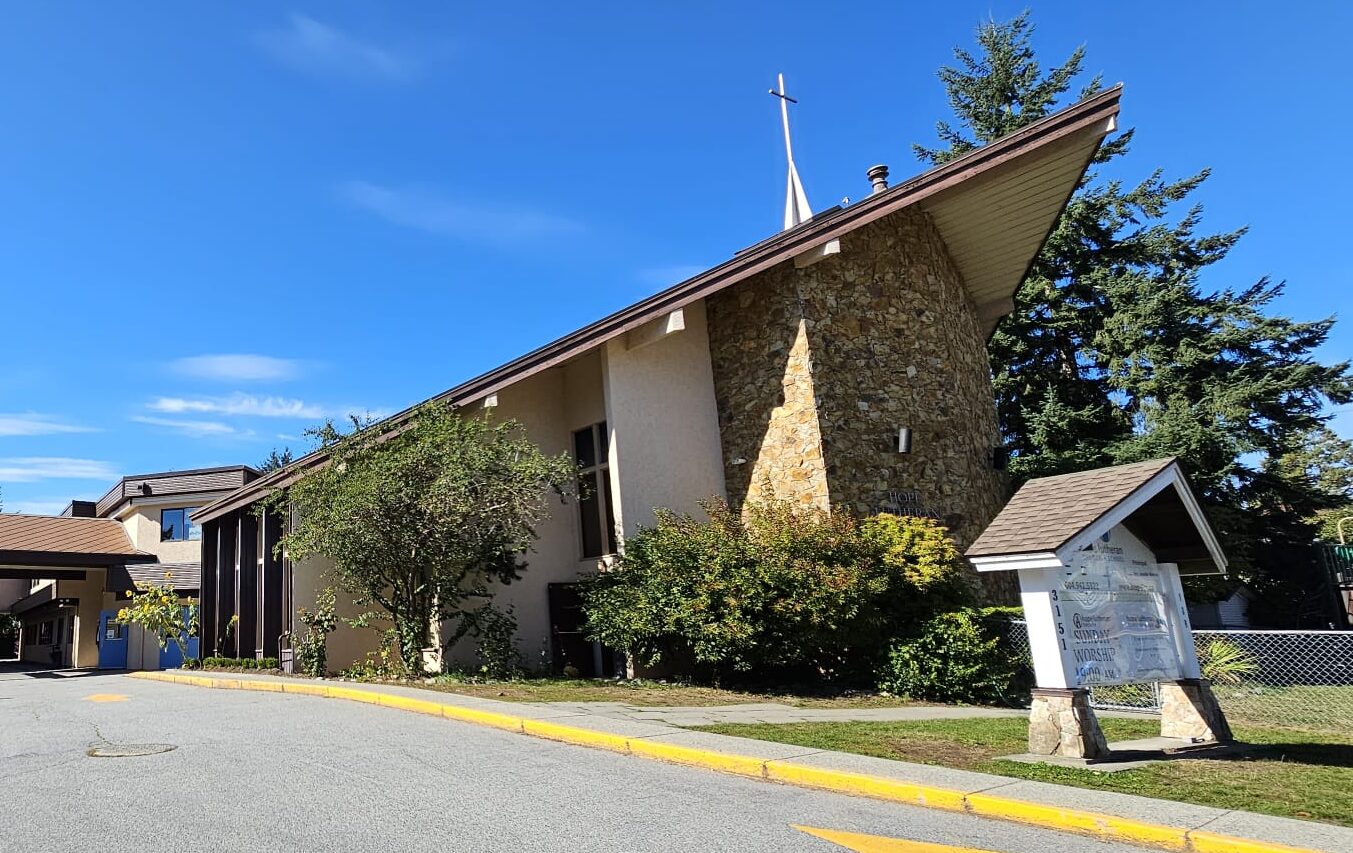
Hope Lutheran Church, Port Coquitlam BC
Text: John 20:19-31
Theme: “After”
___________________________
Intr – We are in the second Sunday after Easter Sunday — also called the Second Sunday of Easter. We are past the episodes of Holy Week.
After. There are many “afters” in our lives. Some of them are quite normal, even joyous. After grade one comes grade two. After one job comes the next. After your team wins a big championship, you celebrate. These are afters that are either simple transitions or causes for joy.
But then there are those other afters. After a divorce or separation. After we lose someone. After we lose a job we loved. After the hope we had in something is crushed and is no longer there. After. And then we have to live with that — walk into that after and figure out the next steps.
An “after” story
Let me share something I don’t share very often. I’ll do it today because it happened right after a Holy Week, and it falls squarely in that second category of difficult afters.
It was the year 2009. The university I was working at — and everything I’m sharing here is public knowledge, more public than we’d like it to be — was in serious trouble. It was a large institution: 5,000 employess across the country. But the financial crisis of 2008 brought devastation across the globe, and that university was not prepared. A series of compounding problems came to a head in early 2009.
Things were going off the rails. At one point, our salaries were 30 days late. Then over the following months, it was a constant drip: we would get 10% one week, another 10% the next, then 5%, then 15%. It was terrible. It all culminated during Holy Week, and the week after, everything had to change. The university president had to be removed. On a Friday night, we held a voters’ meeting, and things began to move from there.
It was chaos. And especially for us in campus ministry, as pastors of that institution, we were dealing with people’s anger, frustration, and hopelessness. “What about the future, pastor? What’s coming? What’s going to happen with our beloved institution?” It was already a very difficult before. But the after — the aftermath of having to remove the president, with the news spreading across the state — was even more difficult.
Looking back, I think there were three things that surfaced during that time. Three things that might resonate with you in whatever after you are facing.
First: fear. Second: the need for peace and restoration. And third: faith — the need for it to be restored, renewed, and reignited.
The Disciples’ After
I use those three things because they connect directly to what we heard in the Gospel today. Our situations in life are hard enough, but the disciples were coming off something far darker: not a difficult voters’ meeting, but a Friday on which their Messiah, the leader they had followed, was crucified. They had to deal with the after of that.
Their hope. Their promise. Crushed. In their perception, everything had crumbled. Jesus was gone.
And even though, on the morning of the resurrection, they see the empty tomb — and the Bible says Peter believed — by that same evening they are still behind locked doors, afraid of what the Jewish leaders might do. The authorities were already spreading the story about a stolen body. Fear had gripped them completely.
1. Fear
The Gospel tells us plainly: “on the evening of that day, the first day of the week, the doors being locked where the disciples were.” The fear was so intense that eight days later — after they had already seen Jesus, after he had said “Peace be with you” — the doors were locked again.
They were just too human. Just like you and me.
They didn’t know what was coming. Jesus had appeared, yes. But he had been killed once. Would he be killed again? Would they be safe? Fear has a way of paralyzing us, even when something is unfolding right before our eyes. Even when we have every reason to trust, uncertainty can grip us and make it hard to see with the eyes of faith.
That’s the same kind of fear that sometimes comes upon us — when we’re facing the consequences of our choices, when things aren’t going the way we’d hoped. Fear. Paralysis. Uncertainty.
And I want to say this clearly: it doesn’t mean you’ve lost your faith because you’re fearful. You may be wavering, but that’s not the same as faith being gone. It just means you are human.
Fear is very real.
But we don’t stop there.
2. Peace and Restoration
We move forward and we see what happens on Easter Sunday evening, when Jesus comes to the disciples. And this is the second thing — the need for peace and restoration.
Think about it: these are ten men who, in the hour Jesus needed them most, were nowhere to be found. Except for John, they had all scattered. What could Jesus have walked into that room and said? “Where were you when I needed you? You, Peter. You, James. You, Andrew.”
But that is not what Jesus does. He knows what they need. So what are the first words out of his mouth? “Peace be with you.”
What brings peace to a heart that is afraid and ashamed? Forgiveness. Jesus comes into that room and forgives them — not by lecturing them, but by giving them peace.
And not only that. He sends them. The very men who had failed him in the most crucial hour, he looks at and says: “Just as the Father sent me, I am sending you.”
Don’t you sometimes feel that God can’t use you? That the way your life is going, there’s nothing left in you worth using? Now think about this: Jesus took ten people who had done something most of us would find very hard to forgive in a friend. And he first calms their hearts, restores their peace, and then says: go. I trust you. Not because of your worth. Because of my grace.
That’s a reminder for us too. In our afters, when we feel worthless or discouraged or stuck, Jesus comes to us and says the same: peace be with you. I am here. You will still lock the doors of your heart sometimes. You will still be afraid. But I am here. And I am sending you — with the gifts you have, with the weaknesses you carry — because I called you.
3. Restored Faith
And then there is Thomas. Thomas, who was not present the first time Jesus appeared. Thomas, who has gone down in history — unfortunately for him — as the doubting Thomas.
But did he end up just doubting? No. Thomas’s confession is one of the most beautiful in all of Scripture: “My Lord and my God.” Kyrios — the word used in Greek for Yahweh, the name of God in the Old Testament. Thomas is confessing that Jesus is God. The doubting Thomas becomes the confessing Thomas. And he is confessing what you and I confess to this day.
Yes, Thomas should perhaps have believed on the word of the ten others who had seen the Lord. The Old Testament says that by the word of two or three witnesses, every matter is established — and he had ten. But remember: the other disciples also needed to see Jesus with their own eyes. Jesus even invited them to look at his hands and his side.
The weakness of Thomas is sometimes our weakness too. We want a sign. “God, if you just do this one thing, then I’ll trust you even more.” As if we needed that thing to supplement his Word. And if it does happen, praise God for it. But our faith is not built on touching things. It is built on the Word.
Jesus says to Thomas: “Because you have seen me, you have believed.” And then — this is where you and I appear in the Gospel: “Blessed are those who have not seen and yet have believed.” That’s your name right there. Because you are here today, believing in a Jesus you haven’t seen with these eyes.
Now, this is important to say: we are people who believe without seeing, but we are not people who believe without reading. We know Jesus from the Word. We need to read the Word. We need to hear it, to inwardly digest it, to be soaked in it. That’s where we see him. That’s where he shows his love and his grace — and his law too. And that’s where we find our Savior, who died on the cross to rescue us from sin.
Conclusion – Let me close with this. You might have been hoping I would tell you that six months later, the university had paid all its bills and everything was back on track. I’m sorry to say it wasn’t. Things were really, genuinely bad, and the aftermath of that situation dragged on for years. I left Brazil in 2016, and things were still being reshaped, still trying to find their footing. The damage was extensive.
But through all of it, those three things were present. The fears were real. But God’s peace was real too. And a restored faith in Jesus was there to guide us, leading campus ministry and other parts of the institution to keep trusting the Lord.
I don’t know what after you are in right now. I hope it’s a good one. But it may not be. Whatever it is — remember: fears are real, but Jesus’s peace is real too. After fear comes his peace. After our sin comes his forgiveness. After a difficult situation, when you walk into that after, Jesus is already there — holding your hand, guiding your steps.
As he did before, He will always be there after too.