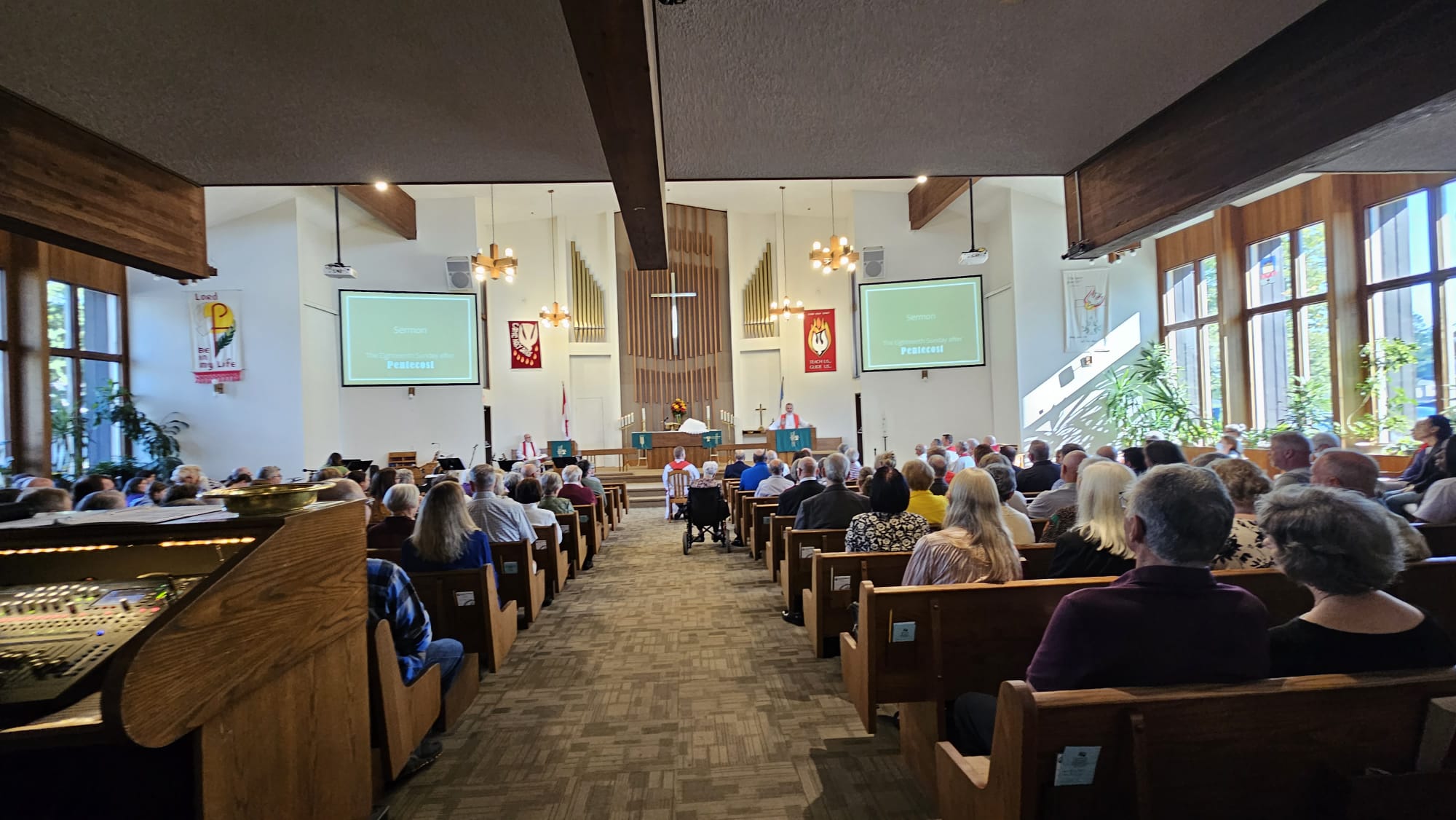

Sermon – November 30, 2025 – 1st Sunday in Advent
Hope Lutheran Church, Port Coquitlam BC
Text: Matthew 24:36-44; Romans 13.8-10; Psalm 122
Theme: “While we’re waiting”
___________________________
Introduction – What do you do when you’re waiting? Well, it depends on what you’re waiting for, right?
Waiting for news from the maternity ward—you pace, you pray, you can’t sit still.
Waiting for test results—you try to distract yourself, but your mind keeps circling back.
Waiting for the final game of the series – you get anxious, you eat something, you get more anxious, and then you get some more anxious.
But what happens if we are… Waiting for nothing? Or just waiting for…something, whatever that is?
There may be some seasons in life in which we’re not really waiting for anything. We’re just filling time, waiting for something to happen next. We go through the motions and expect that some day, some time, somehow, something will happen. Our times have produced a perfect match for those times, btw. A screen to scroll. We check red notifications. We randomly seek something on our phones that might catch our attention. We idle. We wait…. for something.[1] And that can be a spiritually dangerous spot to be.
And here’s the thing: Sometimes we wait as if we were waiting as if the last day won’t come. Or our last day. We idle. We avoid hard conversations to keep friendships smooth. But the Lord is coming. He came once. He will come again.
Advent is about waiting. Waiting with expectation for Christ’s first coming and His second coming. That’s why today’s Gospel is about the last day—we don’t know when, we only know it’s coming. What do we do while we’re waiting? Advent is a good time to think about it.
- Matthew 24: Stay Awake—The Master is Coming
Jesus tells us in Matthew 24: the day and hour are unknown. Two will be in the field; one taken, one left. Two grinding at the mill; one taken, one left. You don’t know when.[2]
To illustrate the point further, Jesus tells a parable. In Jesus’ day, a boss might leave for months, even years—traveling for business or military campaigns. The servant, the employee left in charge had real power. He managed the household, the fields, the other servants. And here’s the temptation: “The master’s far away. He’s been gone a long time. Maybe he won’t come back at all. Why not live for myself?”
But the faithful servant knew: He will return. I just don’t know when. And that uncertainty kept him faithful, in expectation for the return of his boss.[3]
Jesus says: Stay awake. Not just “don’t fall asleep literally,” but don’t live like the master isn’t coming. Don’t idle. Don’t scroll your life away. Don’t live as if this world is all there is.
The faithful servant doesn’t know when the master is coming—but that uncertainty doesn’t paralyze him. It energizes him. That’s Advent waiting.
- We Wait in the Lord
The natural follow up question then would be: how do we stay awake? How do we wait well?
First: We wait in the Lord.
Not in our own strength, but by abiding in Christ, trusting His timing, receiving His sustaining grace. Matthew 24:42 says “stay awake”—but we can’t do that on our own. Left to ourselves, we fall asleep. We wait in the one who died on his cross and came out of His tomb to give us forgiveness, peace and salvation. We stay awake connected to His Word and Sacrament. He holds us in our worst days – but our dull days too, being present and bringing us back to the living voice of His Word.
Yes, there are seasons in life when going through the motions is all we can manage. Maybe you’re grieving. Maybe you’re exhausted. Maybe the weight of what you’re carrying makes it hard to feel anything at all. Even in those times, Jesus’ presence strengthens you to stay awake, resting in him. When everything feels heavy, there are at least two things we can always do as we stay awake: We continue to pray. And we continue to love. Christ meets us where we are.
- We Wait in the House of the Lord
Second: We wait in the House of the Lord.
Psalm 122 says, “I was glad when they said to me, ‘Let us go to the house of the Lord.'” Why? Because waiting alone is dangerous. We may start thinking the master is not coming at all.
When we gather, we keep each other awake. Here, the Word is proclaimed. The Sacraments sustain us. We remind each other: He came. He’s coming. We need each other to stay awake.
The house of the Lord is where God interrupts our “waiting for nothing” and says: “You’re waiting for Me. And I’m already here, sustaining the body of Christ the Church, for the day I return in fullness.”
- We Wait in Love
And Third: We wait in love. Romans 13 tells us today: “Owe no one anything, except to love one another.” Love is the fulfillment of the law. Love does no wrong to a neighbor. We don’t wait passively. We don’t scroll past people. And that includes the fact that we don’t avoid the most important conversations just to keep things comfortable. We want to share the Good news of Christmas because we know there’s many people still in need to hear it!
Think about it: If you knew someone’s house smoke detector went off and they were asleep inside, would you avoid waking them up because it might be awkward? Of course not. You would be compelled to act out of love. [4]
While we’re waiting, we connect. We reach out. We serve. We invite people into the community of faith. Love compels us to speak. Not to attack, but to invite. Not to superficially judge, but to share the hope we have. We don’t let our discomfort become their eternal loss.
At this point, these two questions may come up in our mind:
- This sermon kind of makes me feel guilty. I scroll my phone. I avoid hard conversations. Am I doing Christianity wrong?
This message warns us about spiritual idleness, and feeling guilty is part of it, but not the end of it. The goal is to point to Christ and to wake us all up to grace. Yes, we all have our moments of idling and avoiding. That’s exactly why Jesus came and why He’s coming back—we can’t save ourselves. This message isn’t just about “try harder and Jesus will be happy.” It’s saying “Christ holds you at all times, and he encourages you to live life, with your gifts and personality, not in idleness but in hopeful watchfulness.”
- How do we balance ‘staying awake’ with rest? Aren’t we supposed to rest too?
Yes, we are called to act, and we are called to rest. “Staying awake” doesn’t mean constant activity or busyness—it means living faith in love. Spiritual rest is different from spiritual idling. Resting in God’s promises is itself a way of staying awake. It is restful vigilance, not checked-out idleness.[5]
And if you are a visitor, you may wonder “I don’t know anyone here. How am I supposed to ‘keep each other awake’ if I’m alone?” That’s exactly why we’re glad you’re here. If you can, stay a bit after the service, join us for coffee. We want to start getting to know you. We know it’s hard to break in—but this congregation exists so no one needs to wait alone. As you start joining us, relationships will grow.
Conclusion: What do we do while we are waiting? We wait in love. We wait in Jesus—connected to Him, sustained by Him. We wait in His house—gathered together, keeping each other awake. We wait in love—active, reaching out, confessing the hope we have. This is what we do while we are waiting: We rest in the truth that we’re not merely waiting for something to happen. We wait for Someone to come.
__________________________
[1] And what happens when the Word calls us? (Video), we might react like that little boy: “I was hugging Jesus!”—half-asleep, not fully present, vaguely aware but not really awake.
[2] Jesus speaks these words during His final week in Jerusalem—the cross is days away. The disciples are asking about the end times, and Jesus is preparing them for His departure.
[3] A master leaves and puts his servants in charge. One servant is faithful—he stays ready, does his work, watches for the master’s return. The other says, “My master is delayed,” and starts living like he’s never coming back. He idles. He abuses his position. He lives for today. When the master returns, it’s too late.
[4] A woman told a story about a neighbor she deeply cared for. This neighbor was kind, friendly, and actively involved in the community, but openly skeptical of faith. My friend had been avoiding bringing up Christ for years, afraid of ruining the friendship. She was, in a sense, ‘idling’ out of fear.
Finally, convicted by the certainty of Christ’s return, she realized her fear was less important than her friend’s eternal future. She didn’t want her discomfort to cause an eternal loss. So, she didn’t corner her friend or preach at her. Instead, she wrote a simple, heartfelt, two-sentence note, expressing her deep care for the neighbor and offering a gentle invitation to talk about the hope she found in Jesus. She left it tucked in a thank-you card and slipped it under the neighbor’s door.
It took courage. It made her uncomfortable. But the neighbor didn’t get mad. In fact, a week later, the neighbor approached her, not to argue, but to ask, ‘Tell me why you wrote that note. Tell me about the hope you have.’ That note became the ready tool that opened the door for a difficult but loving conversation. Love compelled her to act.”
[5] A pastor once went to visit a farmer who was doing very well for himself. They sat on the porch talking, and the farmer began to boast a little. He pointed across the fields and said,
“Pastor, everything you can see in that direction… it’s mine.” They walked to the back of the property and he pointed again: “And in that direction—everything you see is mine too.”
The pastor nodded. “Mr. Jones, I’m glad God has blessed you with so much.” But knowing that Mr. Jones’ spiritual life was not in great shape, the pastor gently pointed upward and asked: “And in that direction, Mr. Jones… how much do you have?”
The farmer fell silent. His life was full of all kinds of things—accomplishments, possessions, goals—but lacking what mattered most. Staying spiritually awake.