Texts: 1Cor 1.18-31; Matthew 5:1-12
Theme: “Foolishness that saves”
___________________________
Intro – Dear friend in Christ, after hearing the epistle for today – what Paul says about our Christian faith – would we consider ourselves fools; or morons? I know, that sounds like a foolish question. But hang on with me for the next minutes of this sermon, and I hope that by the end our answer will be: Yes. When it comes to my faith, I definitely think I would like to remain as a fool. Because Paul’s argument is not about celebrating stupidity. It’s about where our salvation rests.
Let’s turn to First Corinthians ch 1. Paul is writing to the people living in the city of Corinth, a cosmopolitan city where all sorts of people circulated. The churches in homes reflected that diversity: tradespeople, slaves, rich and poor. But more importantly, it was a city obsessed with status, oratory, and Sophia (wisdom). In many ways, Corinth was also sort of a “Sin City” of its time and region.
To people living in a city obsessed with Sophia—wisdom, cultural advancement, and eloquence—Paul comes with this crazy analogy. The Word of the Cross is moronic, it is folly before the eyes of the world. He contrasts Sophia with what he calls foolishness. And the word here is morew, which is where the English word “moron” gets is root. Paul says that when it comes to spiritual value, Christians are more comfortable being called foolish for trusting a crucified man than being praised by culture for chasing human wisdom.
However, it is hard for us to see all the grit and weight of this contrast made by Paul as punchier as it was in the first century, when the early Church was involved in trying to make people believe in a man on a cross as the hope for the world.
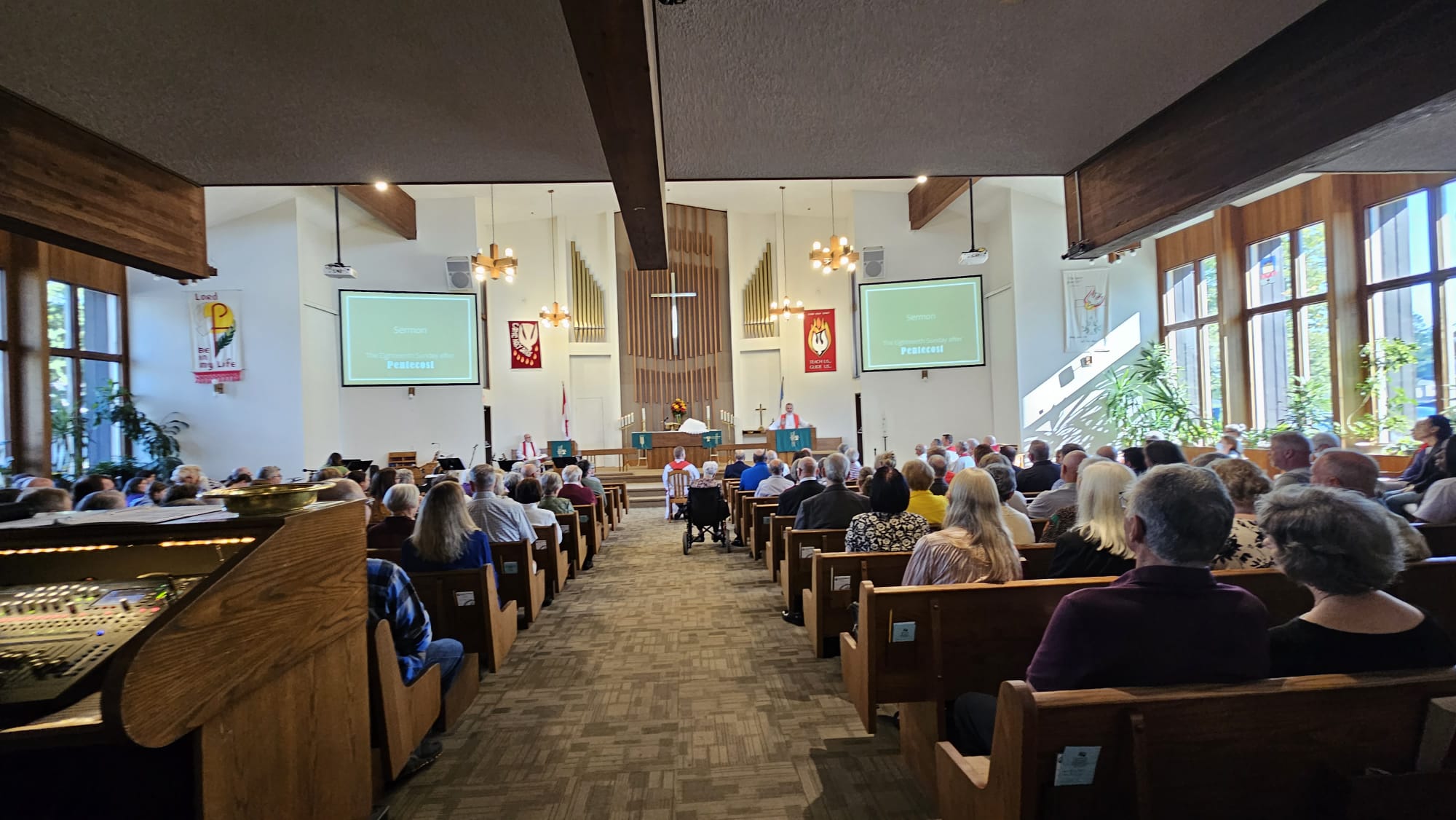
So here is a comparison to retrieve the full impact of what the Cross meant at that time. Imagine if, as you approached church today, you saw a big syringe at the top of our church. That’d be a strange start. But, well, you walk inside anyways. Then, you see a miniature electric chair on the altar. Or a hangman’s noose on the wall behind the altar. What would be your reaction if the pastor started the service by saying: “Welcome! We gather today to worship John Doe, who was executed years ago by death penalty. We come together to celebrate all the good he did for us.”
I can almost hear the reaction: “What? A death-row inmate is celebrated as a Hero and Saviour in this church? What kind of foolish Church is this?” Which number do you think would be higher, people who would stay, or those who would you stand up and immediately walk away? What would you do?
This helps us to understand where our brothers and sisters of the first century were situated. The madness, foolishness of the Gospel starts right there. This is what the Cross represented for many years in the context where Christians were living. The difference is that in this case it was not a criminal, but an innocent man who was sent to the cross. But still, a man who died on a cross. Hope in such man would sound like “a death row inmate is their Hero.”
And yet they were sent out to go make disciples and baptize by sharing that a man who received the death penalty outside Jerusalem decades ago was the Saviour of the World. Because as Paul says: the word of the cross is folly for those who are lost. Yes, for those who are not in Christ, their eternal destination is not salvation, but condemnation. Which makes the Foolishness, madness of the Gospel even more urgent to be shared and proclaimed. And it needs to be done by us – those who in the world’s eyes may be seen as fools.
Paul is talking to Corinth. But he is talking to Vancouver too. Even if it is a different city, is still has similar cultural trends that challenge our faith. Our world still operates with the same definitions of wisdom and power. We can find many examples of how the Christian faith sounds awkward at best and moronic, foolish at worst before the world’s eyes. It is not that hard to establish the contrast between Sophia, wisdom, and Morons, morew, foolish.
Now as we think about this contrast, first thing is we need to be careful in noting that Paul is not despising human reason and wisdom. His point is not that as Christians we don’t need to pursue education and knowledge. We actually use it to be who we are and to be where we are. Paul is not bashing human wisdom. He is showing its limits.
Paul is pointing to a danger that has been present in Corinth and in every city where Christians have lived since: allowing Sophia to get in the way of the Cross. Our desire to make human wisdom the final authority over God’s “foolish” revelation. Paul comes and says: God has chosen off-the-wall things to throw our human pride against the wall. Using Paul’s imagery, the Gospel is a trap. That is the meaning of skandalon, a stumbling block. It is the trigger that keeps a trap armed. Why would God make the Gospel a trap? Not for us, but for our pride. Our self-sufficiency. Our arrogance and your tendency to rely on ourselves.
Therefore, in one hand, we do utilize reason and wisdom to read, understand and inwardly digest our Bible and read the world. God gave us those gifts. However, on the other and most important hand, our goal is to hold on to the scandal, the foolishness of the Cross. Why? Because it is the foolishness that saves.
Here is where we have permission to be morons, fools. Again, that is the Greek word in the text, “morew”. (It was used in psychology as a word for low IQ, but its meaning became “fool, or stupid”.) In terms of faith, we are fools before the world. Because we hold on to the wisdom that is far above what human reason can grasp. Therefore, Sofia dismisses it as moronic. But even the tail end of that wisdom – God’s foolishness – is wiser than the wiser human conceptions, whether natural or AI generated. We hold to the scandal of the Cross because this is the wisdom that really counts.
What are concrete examples of this wisdom of God that appears as foolishness before the wisdom of the world? We are not in Corinth, and the Cross has been ressignified, is not that offensive anymore. But the teachings from the World continue to be scandal and foolish before the World. When you stop to think about what we believe, you understand why we may be considered “morons” before the “sofia” of the World. And you know what? So be it.
Here are some of them: (recite the Nicene Creed)
Also
-We believe there is forgiveness for all, no exception. Including a criminal hanging on a cross, only hours away from his last breath.
-We accept God’s decisions and purposes even when it’s not how we wanted it or when we don’t fully understand it, or when the world doesn’t’ accept it.
-We strive to love our neighbour and pray for our enemies
-We live with the hope that this world will end and life eternal will begin.
And many others. If we want to take a biblical list to illustrate it, we have the Gospel today. They are not moral advice, but as divine inversion:
Blessed are the poor in spirit.
Blessed are those who mourn.
Blessed are the meek.
Blessed are those who hunger and thirst—not for power, but for righteousness.
None of this look impressive. All of them look weak. And yet, this is where God’s kingdom breaks in. This is holy foolishness. This is Cross-shaped wisdom.[1]
One more thing about this text: this is not about us being better than them. Because this is a faith we didn’t figure out, it is a gift that we received from God. So this is the truth we are bound to share with others. Because if Paul says in the text “the Jews seek signs and the Greek wisdom”, in the same context he says, “Both for Jews and Greeks the Word of Gods power to save”. Paul is not interested in polarize, creating an antagonistic setting of “us” versus “them”. As he stating the truth of the Word, he also wants to reach out to all, and bring all to the knowledge of faith.
Conclusion – Therefore, do we consider ourselves a fool, a moron in the sense presented today? I hope that when it comes to the “Foolishness of the Word”, our answer is always “Yes”. Not because of our merit. But because Christ called us to the faith that forgives, strengthens and saves. The man hanging on a Cross, an instrument of death penalty, is the wisdom and power of God to raise the dead and give eternal life. Christ crucified. The foolishness that saves.
__________________________________
[1] I know, it is a big and hard list. Perhaps you thought at some point “Well pastor, I can’t check all the marks there”. Yes, you and I are sinners and we need to be constantly connected to the source of our foolishness. We need his Word, we need the Sacrament, we need the presence of the congregation. He leads us to use the best of your brain capacity, the best of your wisdom, to continue to be a moron when it comes to salvation (it depends on Christ not on my wisdom) and a wise Christian when it comes to apply God’s word to your daily life.
This message from Paul for you, when you feeling you are not enough. God’s wisdom is. It is for when sometimes you feel it is childish to believe the Bible stuff; or when you feel tempted to think that the Christian life should be filled with peaks, glories, and constant high moments. Or even if you are just getting in contact with Christian Lutheran faith and think some of the content is a bit strange. The Christian church, a Christian congregation, is not a self-help seminar; it is a place for the rescue mission by a crucified God who loves the world to the point of offering it His only Son. And we are a part of the “crazy” family in which the wisdom of God is proclaimed, celebrated and shared.