
Sermon – April 19th, 2026
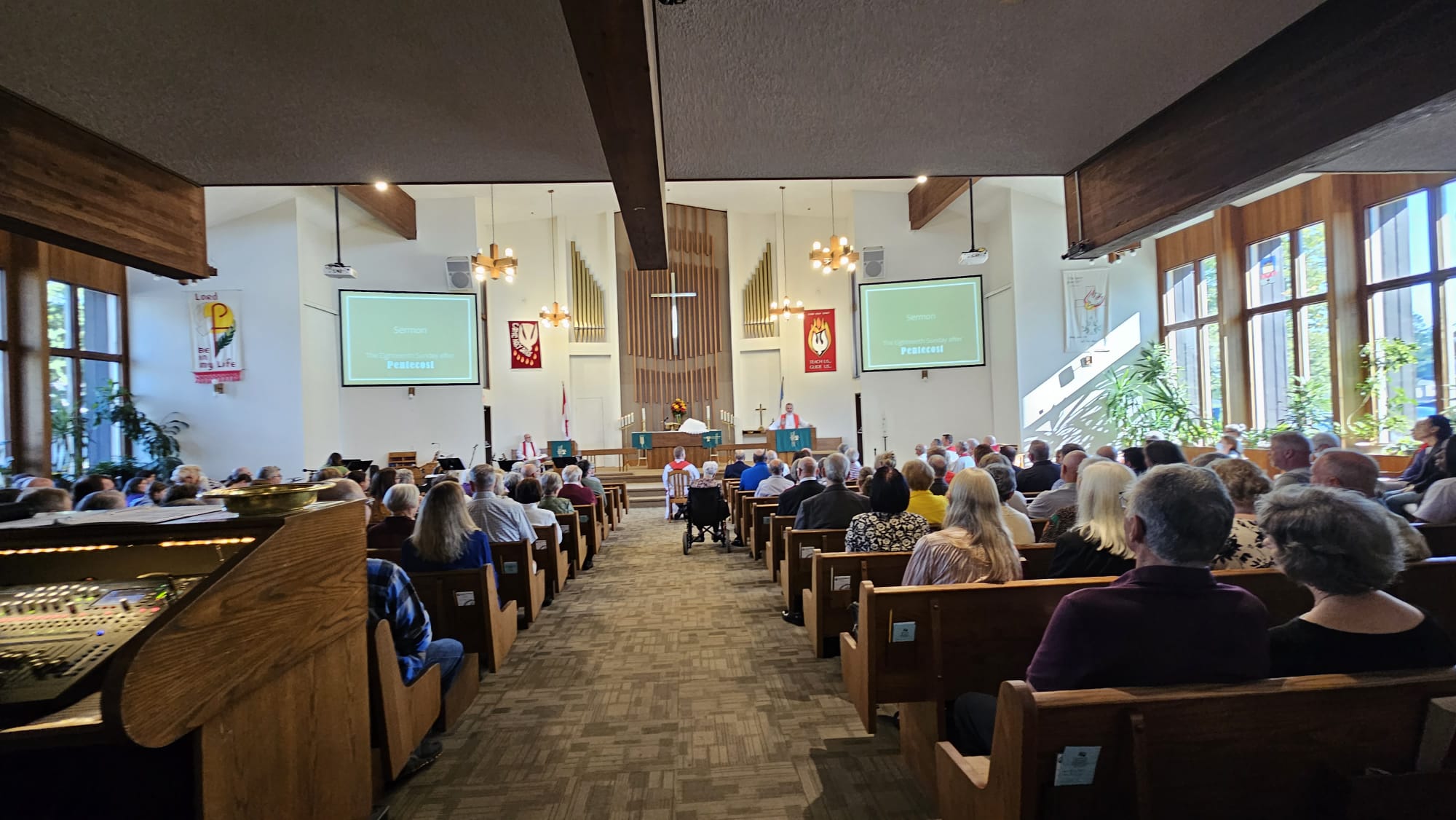
Hope Lutheran Church, Port Coquitlam BC
Text: Luke 24; Acts 2.42-47; 1 Peter 1:17-25
Theme: “Phobia, Fear and Faith”
___________________________
Intr – Phobos tou Theou — the fear of the Lord. Phobos, fear, is a word that appears in the epistle today, and also in verse 43 of Acts 2. I thought it was worth stopping to reflect on it, because it can sometimes get confusing. What does “fear the Lord” mean? Should I be afraid of God? How are fear and faith connected? What can I say to someone who asks me about it?
I start by noting that phobos is the Greek root where psychology gets the word “phobia” to describe the human condition of irrational fear. Acrophobia, arachnophobia, claustrophobia — these are real clinical terms for real, irrational, overwhelming fears. People with phobias suffer because of it, they don’t have control over it and they don’t feed it. But this is Psychology, not Theology.
Then there’s the other use we’ve all seen in our world. The Greek root “phobia” gets attached to things where there’s no irrational fear involved — mainly just disagreement or opposing views. Things are getting so stretched in the use of that word that I think something new is developing: phobicphobia. The fear of being called phobic. Which means your phobia is being phobic, when really, what’s happening is a difference of opinion, perception, choice, or principles. But this is sociology, not Theology.
For this sermon, I want to stay with Scripture. Phobos tou Theou — the fear of the Lord — appears not only in our readings today, but in other parts of Scripture. I think it is important to get it right. First, because it is not about an irrational fear of something we don’t control. More so, because if there is one phobia that, instead of paralyzing us, can actually point to a life of freedom and change — this is it.
- FEAR
There are two ways the Bible speaks about the fear of God.
The first one is the uncomfortable one. It’s the fear of punishment. This fear comes upon our mind and heart when we know we’ve done something wrong. For if you break God’s law, if you sin, you could expect punishment. Jesus himself talks about this type of fear in Matthew 10:28: “Do not fear those who kill the body but cannot kill the soul. Rather fear him who can destroy both soul and body in hell.” God is love and God is justice. He loves the world and he judges the world — and we should take that seriously.
But when you think about it, you realize that if we fear punishment —there’s something that goes even deeper: the fear of not being loved anymore.
Here’s an illustration. Think about a child who has done something wrong. They already know the scolding is coming. But what do they frequently ask when they see that their parent’s face is not favorable to them? “Do you still love me?” That’s the real fear. It is not so much about bad consequences as it is about the relationship.
We see that fear on the road to Emmaus. Those two disciples lost their master, and the fear they carry goes beyond consequences and next steps. It is the fear of abandonment. Do we still have a God who loves us? Jesus seemed to love us so much. But he’s not here anymore. That fear grips them so tightly that they don’t even recognize who’s walking right beside them. As Luke tells it: “They stood still, looking sad.” And when the stranger asked what they were discussing, one of them — Cleopas — answered: “Are you the only visitor to Jerusalem who does not know the things that have happened there in these days?” The disappointment is thick. The hope is past tense: “We had hoped that he was the one to redeem Israel.” Had hoped. Not anymore.
We have many fears in life. The fear of the future. The fear of a diagnosis. The fear of financial collapse, of what’s happening to the family, to the church, to the country. These fears are real. But the biggest fear of all is: Am I — or will I still be — loved? Will there be someone beside me? Will God ever forget me – or even has he already?
The other type of fear is the one that happens inside the relationship. Here the fear of the punishment is gone and the fear within a relationship of love emerges. Because we learn we have been forgiven and that a new life, and a new relationship has been established.
And here is where faith is fundamental.
We can illustrate that with Acts 2. Peter preaches and he holds nothing back: “Let all the house of Israel therefore know for certain that God has made him both Lord and Christ, this Jesus whom you crucified.” Three thousand people are led by the Holy Spirit to Jesus. And verse 43 says: “Fear came upon every soul” — phobos egeneto pase psyche. Faith is followed by fear.
Here though, fear it is an expression of awe, reverence and honour to Him who changes our life. We can call it filial fear — the fear a child has for a loving father and mother. Psalm 110 and Proverbs 1:7 put it simply: “The fear of the Lord is the beginning of wisdom.” Not the end of it. The beginning. Not the fear of being hurt, but a deep reverence. A desire not to grieve the one who loves you. This is the response to the resurrection being true. This is the phobos that frees us.
Martin Luther began his explanation of each of the Ten Commandments with the same words: “We should so fear and love God that…” in our Catechism fear and love are not opposites. They are two sides of the same coin in the life of faith.
1 Peter 1:17 names it for daily life: “If you call on him as Father who judges impartially according to each one’s deeds, conduct yourselves with fear throughout the time of your exile.” The fear of God is not irrational. It is the most rational orientation possible grounded in faith. When you know who God actually is — what he did in Christ, what it cost, what it means — something changes. And this is important. “We may explain fear of the Lord in different ways, but however we define it, the fear of the Lord leads to change. As we live in the fear of the Lord, He accomplishes His purpose in our lives. Scripture speaks of some of the Spirit-inspired results that arise from fearing the Lord. The fear of the Lord “is hatred of evil” (Proverbs 8:13a). The fear of the Lord “is the beginning of wisdom” (Proverbs 9:10a). The early believers walked in the fear of the Lord and, comforted by the Holy Spirit, the church multiplied (see Acts 9:31).”[1]
This is the type of change we see in the episode of Emmaus. It starts with Jesus not scolding them for being afraid. He walks with them. And then he asks them to name it — “What are you talking about?” He wants them to tell their story. Naming our fear may reveal our weakness, but it is also the beginning of turning around on the road. And then he addresses that fear the way he always does: with the Word. “Beginning with Moses and all the Prophets, he interpreted to them in all the Scriptures the things concerning himself.”
Remember this on those days you feel abandoned, unloved, or worthless. God renews his love for you daily, because you can meet him daily on the pages of Scripture. You can meet him here at the altar. You see him reflected in the face of your brother and sister. Your fear of being unloved is met by the fear of the Lord — who is love, and who pours love into your heart.
Then the change happens. Their eyes are opened and they realize it was Jesus. The fear of abandonment gives way to the fear that comes from faith – awe, inspiration, reverence. joy. “Did not our hearts burn within us while he talked to us on the road, while he opened to us the Scriptures?”
What happens next is really inspiring. Remember the hospitality detail we saw in the context of the reading? As evening came, the two disciples urged the stranger not to continue his journey. “Stay with us,” they said, “for it is toward evening and the day is now far spent.” They were warning him. The roads at night were dangerous. You don’t travel in the dark.
After the meal, Jesus is gone. And what do they do? They get up. Same night. Same dark road. Same dangers they had just warned him about. And they walk straight back to Jerusalem to tell everyone what they had seen. No waiting until morning.
Nothing about the road changed. The darkness was the same. The danger was the same. What changed was what they were carrying. And when you’re carrying resurrection, the road matters less than the news.
That is what the fear of the Lord produces. Not the absence of fear. Not a guarantee that the road will get safer. But faith generated in our hearts makes old fears lose their authority. They don’t disappear — they just stop being in charge. The fear of God doesn’t make you fearless. It makes you free. Free to walk difficult roads, free to have conversations you may have been avoiding. You can face any road because you carry faith in our heart.
CONCLUSION – So let me come back to where we started.
Should I be afraid of God? No. You should fear God — which is different. It is not a fear that drives you away from him, but a fear that draws you back. Sin produces the fear of punishment. Grace transforms it into respect and reverence.
How are fear and faith connected? Outside of faith, fear is frightening. Inside our relationship with Christ, Fear is reverence, respect and awe before the God. It generates change.
And what do you say Sunday afternoon when someone asks you about it? You tell them this: fear may come to my heart, especially when I sin. But because he is my Father, I have been changed, and I know that faith guarantees a solid relationship. Therefore, I fear the Lord in respect, honour, love and trust.
The phobos tou Theou — the fear of the Lord — is a gift given in faith. As we live that gift, whom shall we fear? No one. For our Redeemer lives and walks with us.
_____________________________________
[1] “The Fear of the Lord”, September 27, 2021 https://www.lhm.org/dailydevotions/20210927/