Text: Isaiah 63:7–14; Psalm 111; Galatians 4:4–7; Matthew 2:13–23
Theme: “The Light comes to us”
___________________________
Introduction – I’d like to begin today’s sermon with something from the scientific field. Don’t worry—there won’t be a quiz afterward.
Here it is: imagine someone embarks on a space trip. And imagine that they have traveled four light-years now. Well, that distance, four light years, is the distance as measured from Earth. But science says that if a traveler is moving near the speed of light, their own experience of time slows down. Without getting into much detail, here’s the bottom line: what feels like four years for an observer here on Earth might feel like 6 months or so for the traveler.
Same journey. Two very different experiences. Interesting.
As we come to this last Sunday of 2025, that can be a helpful analogy for how this year may have felt to us. For some, the days and months went by in a flash: “What? Is it already Christmas?” For others, it may have felt like March was never going to end. The way we experience time can vary greatly.
But another aspect of this scientific insight caught my attention and leads us deeper into our spiritual life. According to the most recent data, no person or object that has mass, a physical body or shape, can ever reach the speed of light. Never. You might get close, but you cannot travel at 300,000 kilometers per second. Otherwise, you would become light. And that is impossible, for it requires infinite energy.
This gives us a helpful picture of what Scripture tells us about our relationship with God.
First of all, we cannot “speed up” our spiritual lives in a way that allows us to reach God by our own effort. So God comes to us instead. That is what Paul says in Galatians: “When the fullness of time had come, God sent forth His Son.” Notice that the action is entirely on God’s side. Paul does not say, “When humanity finally reached God,” or “When people were finally ready.” No—we could not reach Him, so He came to us in His Son, Jesus Christ. He came at the right time—not when we felt prepared, but when He determined the time was full.
John states simply and clearly in his Gospel: “The true Light that gives light to everyone was coming into the world.” (John 1:9) Jesus becomes truly human—not as an example of how to climb our way to heaven, but as the One who came down to accomplish what we never could.
He does what we cannot do:
• He lives the perfect life we fail to live.
• He bears the sin we cannot carry.
• He dies the death we cannot avoid.
• He rises with the victory we cannot earn.
• He opens the way we cannot create.
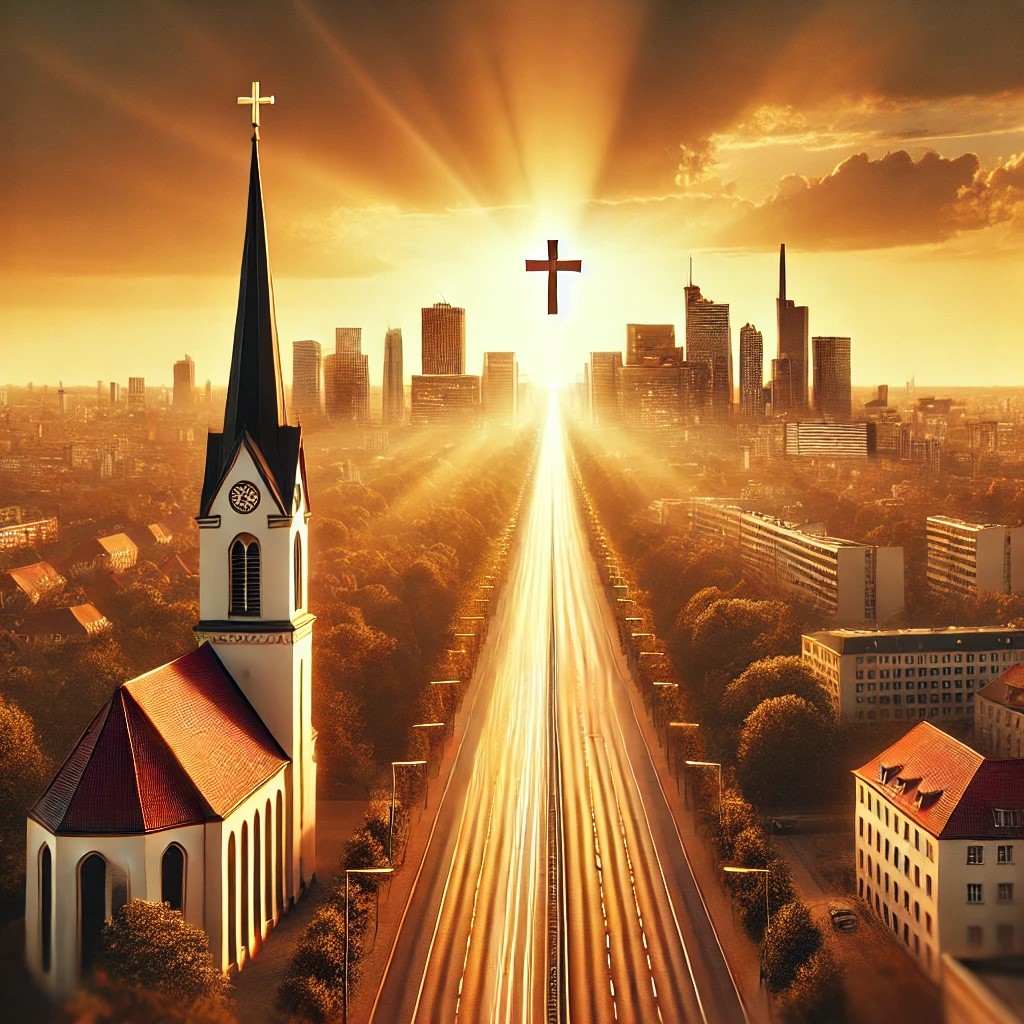
That is Christmas. The Light comes into the darkness—not waiting for us to climb up to Him but stepping down into our world.
In today’s Old Testament reading, Isaiah reminds us of this reality. He looks back on what God has done for His people: how God rescued them, carried them, lifted them up, and remained with them. And we might smile a little, because the people, even though being carried, they would often complain anyway, didn’t they? Parents know this experience: sometimes the child being carried is the first to say, “I’m tired!” even though they’re not the ones doing the work. But God keeps carrying His people. Isaiah’s point is simple: God has a long history of coming to His people when they went astray from Him.
Our Gospel reading adds another dimension. The story of Mary, Joseph, and Jesus fleeing to Egypt is not a peaceful Christmas card scene. They are running for their lives. Evil is active, real grief enters the story, and the world’s darkness is moving at full speed. Yet even in that chaos, God is working. He directs Joseph. He protects the Child. He fulfills His promises. Jesus is the Light who comes not only into calm and ideal moments, but also into moments of fear, confusion, and human weakness.
In other words, Christ came not only for people having a “good year,” but also for those who feel as if the year has been chasing them.
Jesus is the Light we receive by faith—the Light who forgives, restores, and leads. And unlike the scientific world—where things change and theories adjust—His grace does not shift. His promises never change.
And here is the aspect of the analogy: Physics says nobody with mass can ever travel at the speed of light. If it did, it would become light—and that is impossible.
Here’s the parallel: sometimes human beings try to “become light.” They offer paths, philosophies, and solutions that sound good and look appealing. They promise brightness and hope, but in the end, they cannot deliver what the human heart truly needs. No human being can become the Light. Only Jesus can.
Jesus does what, by human standards, is impossible: the Light becomes a human being—in Him. The eternal Light takes on human flesh, real weight, real weakness—without ceasing to be Light. At the same time that He is Light, He also takes on human mass, human form, to be with us, to save us, and to draw us to Himself. He has not infinite energy only, but Power, Wisdom, and Love.
The Light for us today
How could this analogy apply further in our lives today?
First, for those who had a great year—those for whom 2025 was full of blessings, growth, and good news—be joyful and give thanks. Enjoy this moment! And remember: your good season does not mean you have suddenly reached the Light. It means the Light has blessed you. You have every reason to remain rooted in Him, since good seasons in life are gifts from Christ, not achievements that replace Christ.
Second, for those who had a hard year. You may feel slow, weak, or limited. You may feel like you are not “getting closer” to the life God wants for you. If 2025 felt long, heavy, confusing, or painful—take comfort in this: Christ has come and dwells in you through faith. He meets you where you are, not necessarily where you think you should be. He remains steady when life is not. And He does not withdraw from you because you feel weak or discouraged.
Whether the year felt like it flew by in a few months or dragged on like four long years, the truth is the same: your hope does not rest in how well you traveled through the year. Your hope rests in how Christ has come to you and how He remains with you every single day.
That is the centre of Christmas, that is the promise of the Gospel. And that is your foundation as you step into a new year. God does not wait for us to reach Him. He comes to us in Christ—in His birth, His cross, His resurrection, and His ongoing presence.
Whether your life feels bright or dim today, your confidence is the same: not in your ability to reach God, but in God’s faithfulness to reach you in Christ. Christ comes to you again and again through His Word and His Sacraments, bringing what you cannot produce on your own: forgiveness, strength, hope, and the assurance of eternal life. And that truth steadies us at the year’s end and new beginning.
Conclusion – My dear friend, you cannot reach the speed of light. And actually, you don’t need to. Because the Light—Jesus Christ—has reached you. He has come to redeem you. He is with you. And He will go before you into every day of the coming year.