
Text: Romans 15:4-13
Theme: “Peace promised, Peace in Person”
___________________________
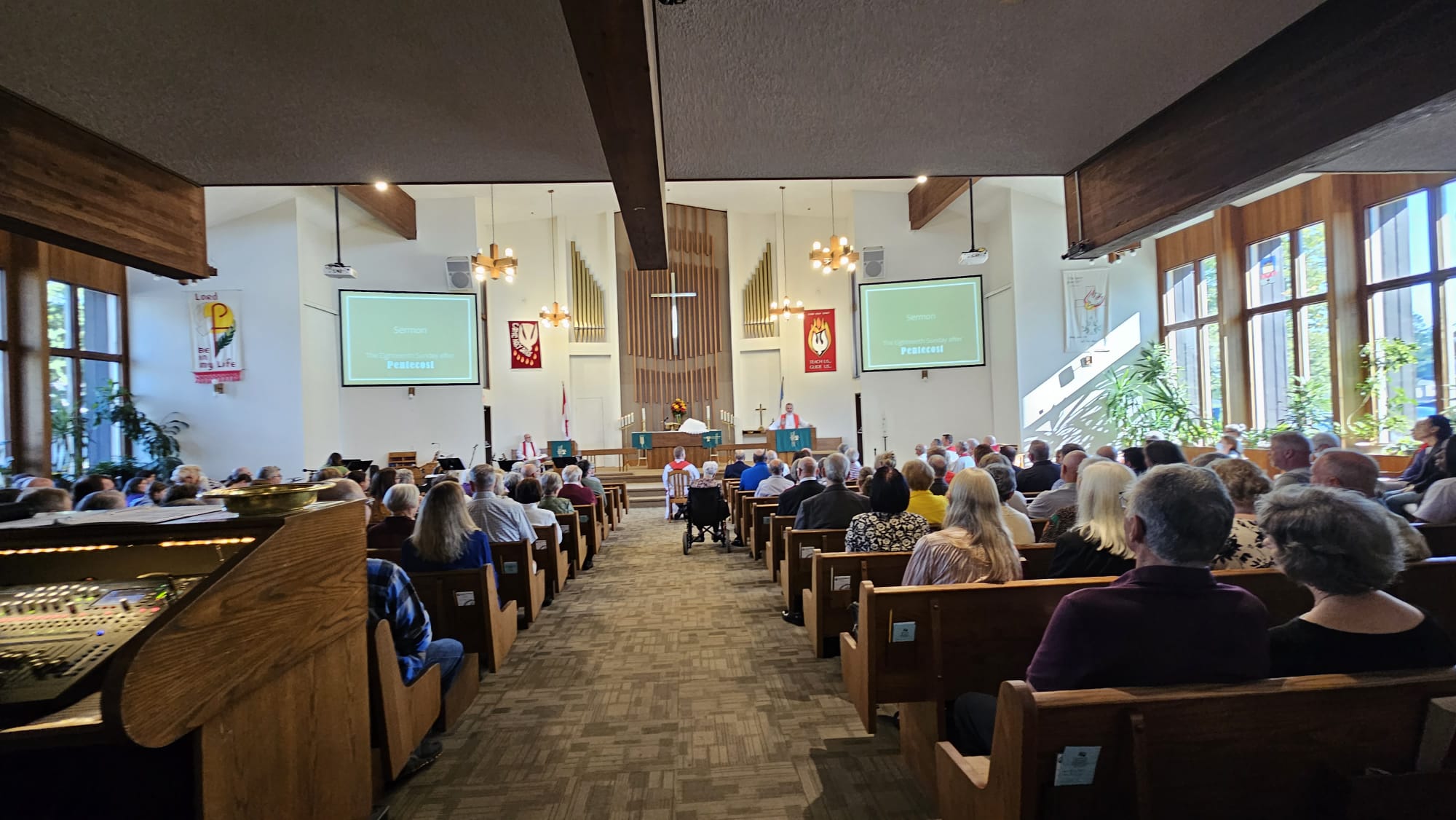
Intr – Paul’s beautiful prayer closing our epistle reading is also on one of our banners in the Church. Can you read it with me? “May the God of hope fill you with all joy and peace in believing, so that by the power of the Holy Spirit you may abound in hope.”
We know what peace Paul is talking about: The peace that the World cannot give. Peace that is not the absence of problems, but the presence of God in the midst of problems.
At this point, I think I can hear your thoughts, “Oh, here’s pastor again with the ‘peace the world cannot give’ sermon. I know, it is important, but I heard that one before.” And your mind reaches for the automatic pilot switch.
Well, I could always resort to the pastoral advice “But those are things we need to hear over and over again”, which is true. But beyond that, we can think about ways in which this peace shows up in concrete life.
Peace is knowing your sin and has a solution.
Peace is when you’re overwhelmed by life’s decisions but you’re not alone in making them.
Peace is a mother raising and caring for a child, even when the world seems to be a hostile place to be and future looks dark and gloomy.
Peace is God holding you steady even when many things in your life are unsteady.
Peace is when you see the world changing around you and you are standing on the solid ground of God’s Word.
This means that Peace comes to us even if we are living in a messy present. If peace meant ‘everything is finally calm,’ none of you would ever have it. If peace meant ‘my feelings are steady all the time,’ none of us could make it past lunch.
The Underpinnings of Peace: Truthfulness and Mercy
This is Peace promised, and Peace present. Romans 15 shows us the two strong pillars that uphold this peace: God’s Truthfulness and God’s Mercy.
1. Truthfulness – The Certainty That God’s Promises Never Fail
Paul makes reference to the patriarchs. Think about Abraham. God gave him promises that were, in human terms, quite incredible: “You will have more children than stars in heaven.” “The Messiah will come from your line.” In Abraham’s context, that could be akin to saying to many of us, “You great-grandchild will own 10 houses in Vancouver area.” Now, did this happen in Abraham’s time? No. It took centuries to come to pass. But it came true.
Paul brings this up not to show how good the patriarchs were, but how Good God is. The fact that the promise of the Messiah was fulfilled and he came into the world, becoming one of the very people he came to save, proves God’s faithfulness.
And this faithfulness brings peace to your soul. Because you don’t have to wonder if God will keep His word. You don’t have to anxiously wonder whether His promises apply to you. The same God who was faithful to Abraham is faithful to you—and that brings deep, abiding peace.
God’s Truthfulness secures the Peace Promised.
2. Mercy
Paul talks about Truthfulness and he also talks about Mercy.
What is a good definition for God’s Mercy? Here’s one: The guarantee that God will not give us what we deserve.
Our sins deserve punishment; God’s mercy spares us. Our sins lead us to death; God’s mercy spares us from it. Our sin creates a gap; God’s mercy doesn’t allow it to swallow us. God’s mercy brought the message beyond blood – that is, the promise not only for people who were born as Hebrews; it is for all. That’s why Paul writes: “In order that the Gentiles might glorify God for His mercy.” The fact that today we are here, in a church worshiping Him, is a living testament to this mercy of God to all nations.
This mercy grants us peace—peace between God and humanity, peace in your own heart. We have “peace with God through our Lord Jesus Christ.” This is the peace that says: You don’t have to pretend to be better than you are, because His mercy is infinitely larger than your sin.
This makes a world of difference. God’s promise shapes our life and sustains our soul in a way that nothing else can do. Not a single thing, person, possession, or power are or will ever be able to match what God’s faithfulness and Mercy do in your life. His promises are faithful, and His mercy endures.
Human Promises
The word “Promise” in God’s vocabulary is different from the world’s dictionary. Think about the promises that once seemed so solid in your life—the ones that eventually faded or broke.
A teacher once said: “I’m sure you’ll make it to college”
A boss once said: “Your job is secure.”
A friend once said: “I’ll always be here.”
And then things changed…
These aren’t necessarily bad people making bad promises. These are human promises doing what human promises frequently do: they wear out in the reality of a broken world.
Or think bigger and contrast it with the powerful concepts and promises that, throughout history, people have held onto.
“The telegraph will end all war.”[1]
“Nuclear power will eliminate the need for fossil fuels.”[2]
“The internet will make society more peaceful and connected.”[3]
Or a more recent
“Machine intelligence is the last invention that humanity will ever need to make.”[4]
One by one, words and certainties wear out. The promises that sounded unshakeable turn out to be built on sand. But God’s promise remains: “May the God of hope fill you with all joy and peace in believing.” We repeat it because its meaning hasn’t vanished. Its effect hasn’t expired. Its purpose hasn’t weakened. When every other certainty wears out, the peace of Christ still stands.
God’s peace is different from the world’s words. There are words that wear out in time. They were used for some time, but then new ones replaced them. When it comes to Jesus’ words, you’ve heard them many times – and you still hold on to them. Because His promise of peace has not vanished. It is an “old” word, but still with very present meaning.
Peace in Person
But if we are still not convinced that this Peace is not conventional, here’s the ultimate difference: peace is not merely an idea or a feeling. Peace is a person. God’s truthfulness and mercy come together give us peace in the form of a Person. Jesus is our peace in person.
Imagine arriving in a country you’ve never been to for an important event. You try to figure things out, and you have tools in your cellphone to help you, but your heart’s still racing. Now compare that to stepping into the airport lounge and having a local friend standing right there, smiling, hugging you, saying, ‘Welcome—you’re with me now. I’ll guide you.’
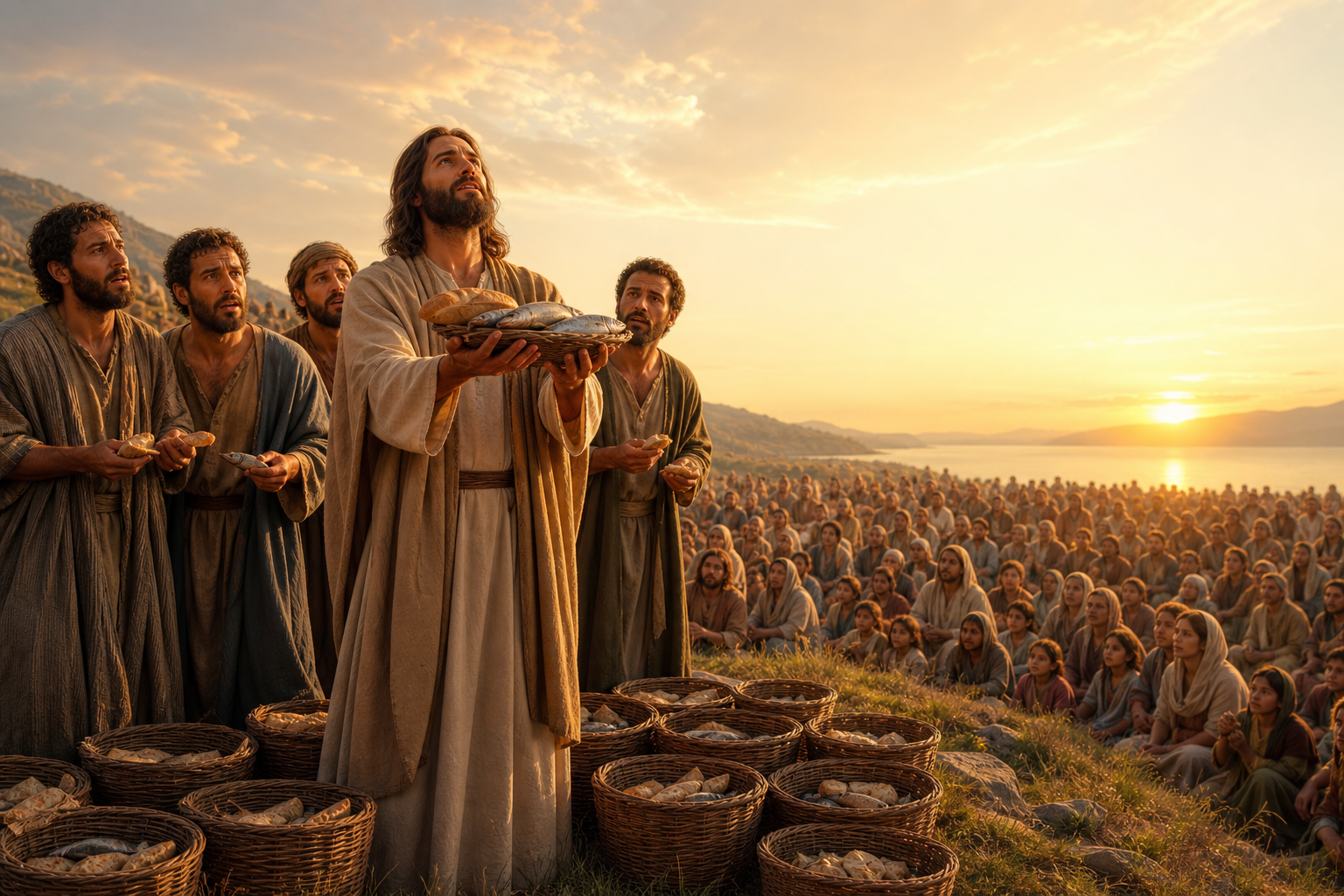
Jesus came to be with us in person. He made himself present, incarnate in Christmas, killed on the Cross, and back alive on Easter morning to say: Peace be with you.
Peace for Today
You may be walking into December already tired—too much to do, too many unknowns. The world tells you to create your own inner peace. Mindfulness maybe? Paul tells you something different and incomparable: “The God of hope fill you with all joy and peace in believing.” This Peace is not something you achieve, but something God gives. You may still feel anxious at times. Your circumstances may still be hard. But underneath, there is a deeper reality: you are held by a God who keeps His word and has mercy on you.[5]
Jesus doesn’t just say, ‘There’s peace out there somewhere.’ He says, ‘My peace I give to you.’ Your peace has a name on it. It is not random, or just for ‘whoever feels worthy.’ It is delivered personally. God’s peace is not a general broadcast floating in the air. It’s the Lord calling your name, placing peace into your heart through the blood of Christ. It is a peace that was purchased at the cost of His blood, sealed with His promise, and delivered, in person, into your heart by the Holy Spirit.
Advent reminds us that we are waiting, but not empty-handed. There is a Saviour who died and rose to bring you into His mercy. There is a Spirit who can bring peace even into hearts that are restless and unsure. This peace does not mean your life will suddenly be easy. It means you do not go through it alone.
The world can offer calm weekends. Only God can offer a calm conscience.
The World offers peaceful words. God offers you Peace in Person – Jesus.
God doesn’t wait for your life to settle down before He settles your heart. Peace comes from knowing the One who has already stepped into the worst wilderness—your sin, your fear, your uncertainty—and didn’t walk away.
Peace is when the World’s cares pressure you at Christmas, but your heart rests in the manger of the Baby King.
Conclusion – “A member once told the pastor, ‘Pastor, peace for me isn’t when everything goes right. It’s when I can say, I know who holds me even if I don’t know what comes next.’ That is well said.
The patriarchs waited centuries for this peace. Peace has come and fully accomplished salvation in the manger, the cross, and the empty tomb.
So let’s return to where we began. Look at those words on our banner again—not as something familiar we’ve heard before, but as the very gift God places in your hands today. Read it with me one more time: [Romans 15:13] “May the God of hope fill you with all joy and peace in believing, so that by the power of the Holy Spirit you may abound in hope.”
Yes, this is the peace that the world cannot give.
But you and I, by the grace of God, have a privilege: we can give and we can live this peace to the world.
______________________________
[1] Sir John Bowring (British diplomat and Governor of Hong Kong). In the 1850s, Bowring reportedly stated that the telegraph and steam power would make war “impossible” by tying nations together economically and allowing instant resolution of disputes.
[2] Lewis Strauss (Chairman of the U.S. Atomic Energy Commission). In a 1954 speech to the National Association of Science Writers, he famously predicted nuclear power would provide electricity “too cheap to meter.”
[3] Various Internet Pioneers/Activists. This exact quote is harder to pin to one person, but it summarizes the widely held utopian vision of the internet’s early days, echoing the sentiments of writers like Howard Rheingold (author of The Virtual Community) and the general idealism of the 1990s digital revolution.
[4] Nick Bostrom (Philosopher, Director of the Future of Humanity Institute). This quote captures the sentiment that AGI would unleash an “intelligence explosion” (often called the Singularity), which would then autonomously solve all remaining problems, making any further human invention unnecessary.
[5]Peace is anchored in God’s truthfulness and mercy. It is Peace Promised and Peace Present. This is not the world’s fragile, circumstantial peace, but the peace that passes understanding—rooted in God’s unchanging faithfulness and boundless mercy. The patriarchs waited centuries for this peace. We receive it now, fully accomplished in the manger, the cross, and the empty tomb.